
By using this site, you agree to the Privacy Policy and Terms of Use.
Accept
Sécurité Helvétique News | AmyrisSécurité Helvétique News | AmyrisSécurité Helvétique News | Amyris
  • Home
  • Compliance
    Compliance
    Show More
    Top News
    Companies Plan to Maintain Climate Disclosures Despite Political Shifts
    24 December 2024
    CMMC 2.0 Creates New Compliance Calculus for Defense Contractors
    4 July 2025
    McDonald’s Delaware Court Decision Will Change CCO World Forever
    21 February 2023
    Latest News
    US Finalizes CMMC Rule: Cybersecurity Verification Now Determines Contract Eligibility for Defense Contractors
    13 December 2025
    Top 10 Risk & Compliance Trends for 2026
    7 December 2025
    How 2025 Redefined Telemarketing Compliance
    1 December 2025
    Advice for the AI Boom: Use the Tools, Not Too Much, Stay in Charge
    25 November 2025
  • Cyber Security
    Cyber Security
    Show More
    Top News
    Twitter Limits SMS-Based 2-Factor Authentication to Blue Subscribers Only
    21 February 2023
    Experts Sound Alarm Over Growing Attacks Exploiting Zoho ManageEngine Products
    23 February 2023
    Shocking Findings from the 2023 Third-Party App Access Report
    27 February 2023
    Latest News
    North Korean Hackers Target Developers with Malicious npm Packages
    30 August 2024
    Russian Hackers Exploit Safari and Chrome Flaws in High-Profile Cyberattack
    29 August 2024
    Vietnamese Human Rights Group Targeted in Multi-Year Cyberattack by APT32
    29 August 2024
    2.5 Million Reward Offered For Cyber Criminal Linked To Notorious Angler Exploit Kit
    29 August 2024
  • Technology
    Technology
    Show More
    Top News
    PlayStation’s State of Play Livestream Coming Thursday: How to Watch, Start Time
    23 February 2023
    Meet the couple that built an EV rock crawler for King of the Hammers
    24 February 2023
    16 Best Deals on Home Office Gear: Portable Monitors, Desks, Power Strips
    3 March 2023
    Latest News
    Why XSS still matters: MSRC’s perspective on a 25-year-old threat  | MSRC Blog
    9 September 2025
    Microsoft Bug Bounty Program Year in Review: $13.8M in Rewards | MSRC Blog
    28 August 2025
    Microsoft Bounty Program Year in Review: $16.6M in Rewards  | MSRC Blog
    27 August 2025
    postMessaged and Compromised | MSRC Blog
    26 August 2025
  • Businness
    Businness
    Show More
    Top News
    US stocks edge up despite rate rise worries
    23 February 2023
    Exclusive-Events software vendor Cvent rebuffs $3.9 billion Blackstone bid-sources By Reuters
    24 February 2023
    Bloom, a UNICEF ambassador and actor, visits children’s centre in Kyiv By Reuters
    27 March 2023
    Latest News
    Blue Owl Technology Finance stock initiated with Buy rating by B.Riley
    16 December 2025
    Client Challenge
    15 December 2025
    At least 2 killed and 8 injured hurt in shooting at Brown University with suspect still at large
    14 December 2025
    Thailand vows to keep fighting Cambodia, despite Trump's ceasefire claim
    13 December 2025
  • ÉmissionN
    Émission
    Cyber Security Podcasts
    Show More
    Top News
    Stream episode Cybercrime Wire For Mar. 18-19, 2023. Weekend Update. WCYB Digital Radio. by Cybercrime Magazine podcast
    18 March 2023
    Stream episode Cybercrime Wire For Mar. 24, 2023. Kids Coding Camp Silent After Data Breach. WCYB Digital Radio. by Cybercrime Magazine podcast
    26 March 2023
    Stream episode Cybercrime Wire For Apr. 3, 2023. UK NHS Outsourcer Captia Had IT Failure. WCYB Digital Radio. by Cybercrime Magazine podcast
    3 April 2023
    Latest News
    Stream episode Cybercrime Magazine Update: Cybercrime In India. Sheer Volume Overwhelming Police Forces. by Cybercrime Magazine podcast
    3 March 2025
    Autonomous SOC. Why It’s A Breakthrough For The Mid-Market. Subo Guha, SVP of Product, Stellar Cyber
    2 March 2025
    Cyber Safety. Protecting Families From Smart Toy Risks. Scott Schober, Author, "Hacked Again."
    2 March 2025
    Cybercrime News For Feb. 25, 2025. Hackers Steal $49M from Infini Crypto Fintech. WCYB Digital Radio
    2 March 2025
Search
Cyber Security
  • Application Security
  • Darknet
  • Data Protection
  • network vulnerability
  • Pentesting
Compliance
  • LPD
  • RGPD
  • Finance
  • Medical
Technology
  • AI
  • MICROSOFT
  • VERACODE
  • CHECKMARKX
  • WITHSECURE
  • Amyris
  • Contact
  • Disclaimer
  • Privacy Policy
  • About us
© 2023 Sécurité Helvétique NEWS par Amyris Sarl. Tous droits réservés
Reading: How to Detect New Threats via Suspicious Activities
Share
Sign In
Notification Show More
Font ResizerAa
Sécurité Helvétique News | AmyrisSécurité Helvétique News | Amyris
Font ResizerAa
  • Home
  • Compliance
  • Cyber Security
  • Technology
  • Business
Search
  • Home
    • Compliance
    • Cyber Security
    • Technology
    • Businness
  • Legal Docs
    • Contact us
    • Disclaimer
    • Privacy Policy
    • About us
Have an existing account? Sign In
Follow US
  • Amyris
  • Contact
  • Disclaimer
  • Privacy Policy
  • About us
© 2023 Sécurité Helvétique par Amyris Sarl.
Sécurité Helvétique News | Amyris > Blog > Cyber Security > How to Detect New Threats via Suspicious Activities
Cyber Security

How to Detect New Threats via Suspicious Activities

webmaster
Last updated: 2023/02/21 at 2:21 PM
webmaster
Share
8 Min Read
SHARE

Unknown malware presents a significant cybersecurity threat and can cause serious damage to organizations and individuals alike. When left undetected, malicious code can gain access to confidential information, corrupt data, and allow attackers to gain control of systems. Find out how to avoid these circumstances and detect unknown malicious behavior efficiently.

Challenges of new threats’ detection

While known malware families are more predictable and can be detected more easily, unknown threats can take on a variety of forms, causing a bunch of challenges for their detection:

  1. Malware developers use polymorphism, which enables them to modify the malicious code to generate unique variants of the same malware.
  2. There is malware that is still not identified and doesn’t have any rulesets for detection.
  3. Some threats can be Fully UnDetectable (FUD) for some time and challenge perimeter security.
  4. The code is often encrypted, making it difficult to detect by signature-based security solutions.
  5. Malware authors may use a “low and slow” approach, which involves sending a small amount of malicious code across a network over a long time, which makes it harder to detect and block. This can be especially damaging in corporate networks, where the lack of visibility into the environment can lead to undetected malicious activity.

Detection of new threats

When analyzing known malware families, researchers can take advantage of existing information about the malware, such as its behavior, payloads, and known vulnerabilities, in order to detect and respond to it.

But dealing with new threats, researchers have to start from scratch, using the following guide:

Step 1. Use reverse engineering to analyze the code of the malware to identify its purpose and malicious nature.

Step 2. Use static analysis to examine the malware’s code to identify its behavior, payloads, and vulnerabilities.

Step 3. Use dynamic analysis to observe the behavior of the malware during execution.

Step 4. Use sandboxing to run the malware in an isolated environment to observe its behavior without harming the system.

Step 5. Use heuristics to identify potentially malicious code based on observable patterns and behaviors.

Step 6. Analyze the results of reverse engineering, static analysis, dynamic analysis, sandboxing, and heuristics to determine if the code is malicious.

There are plenty of tools from Process Monitor and Wireshark to ANY.RUN to help you go through the first 5 steps. But how to draw a precise conclusion, what should you pay attention to while having all this data?

The answer is simple – focus on indicators of malicious behavior.

Monitor suspicious activities for effective detection

Different signatures are used to detect threats. In computer security terminology, a signature is a typical footprint or pattern associated with a malicious attack on a computer network or system.

Part of these signatures is behavioral ones. It’s impossible to do something in the OS and leave no tracing behind. We can identify what software or script it was via their suspicious activities.

You can run a suspicious program in a sandbox to observe the behavior of the malware and identify any malicious behavior, such as:

  • abnormal file system activity,
  • suspicious process creation and termination
  • abnormal networking activity
  • reading or modifying system files
  • access system resources
  • create new users
  • connect to remote servers
  • execute other malicious commands
  • exploit known vulnerabilities in the system

Microsoft Office is launching PowerShell – looks suspicious, right? An application adds itself to the scheduled tasks – definitely pay attention to it. A svchost process runs from the temp registry – something is definitely wrong.

You can always detect any threat by its behavior, even without signatures.

Let’s prove it.

Use case #1

Here is a sample of the stealer. What does it do? Steals user data, cookies, wallets, etc. How can we detect it? For example, it reveals itself when the application opens the Chrome browser’s Login Data file.
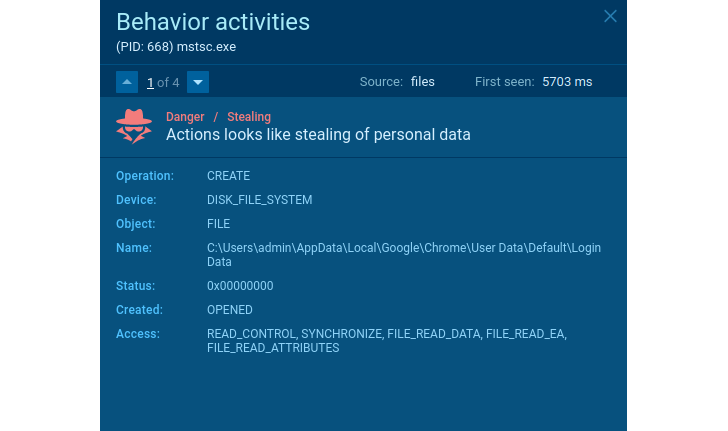
Malware analysis
Stealer’s suspicious behavior

The activity in the network traffic also announces the threat’s malicious intentions. A legitimate application would never send credentials, OS characteristics, and other sensitive data collected locally.

In the case of traffic, malware can be detected by well-known features. Agent Tesla in some cases does not encrypt data sent from an infected system like in this sample.
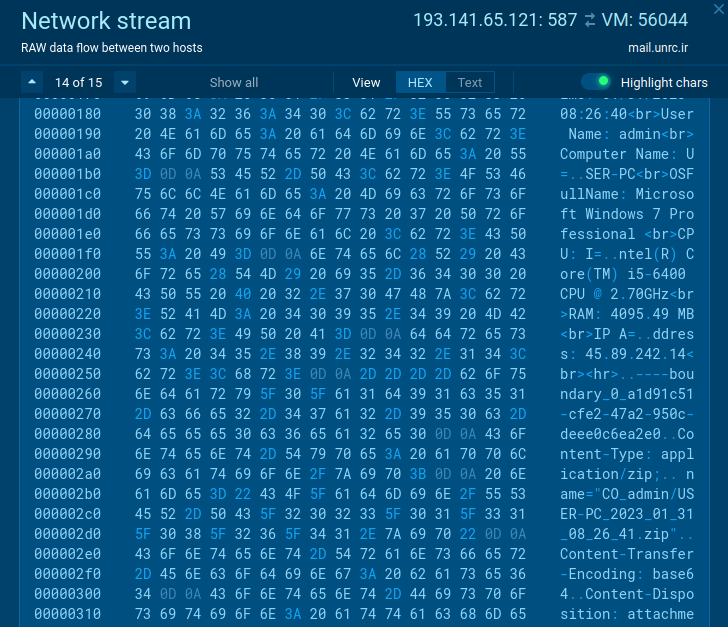
Malware analysis
Suspicious activity in the network traffic

Use case #2

There are not many legitimate programs that need to stop Windows Defender or other applications to protect the OS or make an exclusion for itself. Every time you encounter this kind of behavior – that’s a sign of suspicious activity.
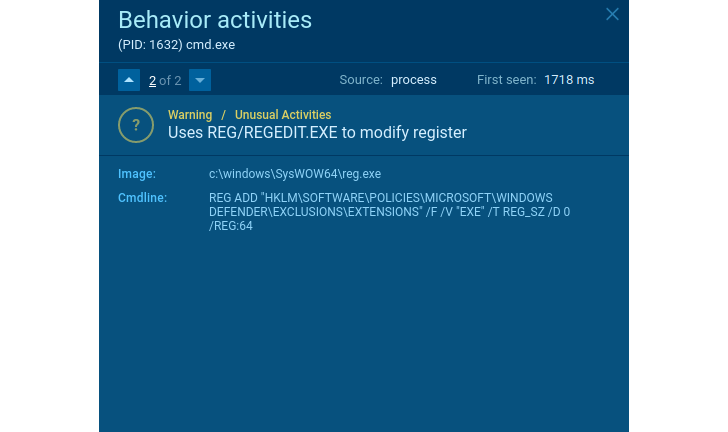
Malware analysis
Suspicious behavior

Does the application delete shadow copies? Looks like ransomware. Does it remove shadow copies and create a TXT/HTML file with readme text in each directory? It’s one more proof of it.

If the user data is encrypted in the process, we can be sure it is ransomware. Like what happened in this malicious example. Even if we do not know the family, we can identify what kind of security threat this software poses and then act accordingly and take measures to protect working stations and the organization’s network.
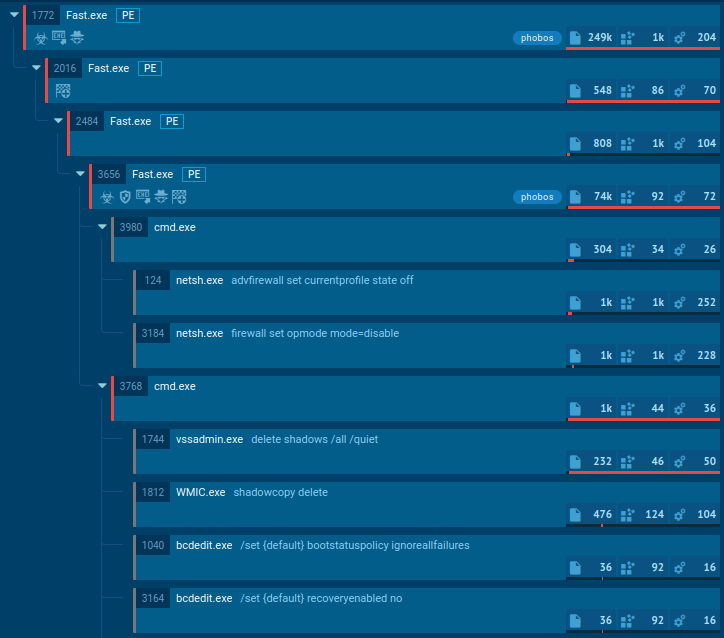
Ransomware suspicious behavior

We can draw conclusions about almost all kinds of malware based on the behavior observed in the sandbox. Try ANY.RUN online interactive service to monitor it – you can get the first results immediately and see all malware’s action in real time. Exactly what we need to catch any suspicious activities.

Write the “HACKERNEWS2” promo code at support@any.run using your business email address and get 14 days of ANY.RUN premium subscription for free!

Wrapping up

Cybercriminals can use unknown threats to extort businesses for money and launch large-scale cyberattacks. Even if the malware family is not detected – we can always conclude the threat’s functionality by considering its behavior. Using this data, you can build information security to prevent any new threats. Behavior analysis enhances your ability to respond to new and unknown threats and strengthens your organization’s protection without additional costs.

Found this article interesting? Follow us on Twitter  and LinkedIn to read more exclusive content we post.

Contents
Challenges of new threats’ detectionDetection of new threatsMonitor suspicious activities for effective detectionUse case #1 Use case #2Wrapping up

You Might Also Like

North Korean Hackers Target Developers with Malicious npm Packages

Russian Hackers Exploit Safari and Chrome Flaws in High-Profile Cyberattack

Vietnamese Human Rights Group Targeted in Multi-Year Cyberattack by APT32

2.5 Million Reward Offered For Cyber Criminal Linked To Notorious Angler Exploit Kit

Unpatched AVTECH IP Camera Flaw Exploited by Hackers for Botnet Attacks

Sign Up For Daily Newsletter

Be keep up! Get the latest breaking news delivered straight to your inbox.

By signing up, you agree to our Terms of Use and acknowledge the data practices in our Privacy Policy. You may unsubscribe at any time.
Share This Article
Facebook Twitter Whatsapp Whatsapp LinkedIn Reddit Telegram Email Copy Link Print
Share
Previous Article Farmers & Merchants Bank Declares $28 Quarterly Dividend; 1.6% Yield By Investing.com
Next Article Evolving the Snyk CLI through an extensible approach
Leave a comment Leave a comment

Comments (0) Cancel reply

Your email address will not be published. Required fields are marked *

Stay Connected

235.3k Followers Like
69.1k Followers Follow
11.6k Followers Pin
56.4k Followers Follow
136k Subscribers Subscribe
4.4k Followers Follow
- Advertisement -
Ad imageAd image

Latest News

From Prompt Injection To Account Takeover · Embrace The Red
Pentesting 16 December 2025
6 Personalized Stationery Sets for a Fancy Kind of Sentimentality
ARCHITECTURE 16 December 2025
Switzerland to tighten rules on military service for dual nationals
SWITZERLAND 16 December 2025
From Prompt Injection To Account Takeover · Embrace The Red
Pentesting 16 December 2025
//

We influence 20 million users and is the number one business and technology news network on the planet

Sign Up for Our Newsletter

Subscribe to our newsletter to get our newest articles instantly!

Loading
Sécurité Helvétique News | AmyrisSécurité Helvétique News | Amyris
Follow US
© 2023 Sécurité Helvétique NEWS par Amyris Sarl. Tous droits réservés
Amyris news letter
Join Us!

Subscribe to our newsletter and never miss our latest news, podcasts etc..

Loading
Zero spam, Unsubscribe at any time.
login Amyris SH
Welcome Back!

Sign in to your account

Lost your password?